Showing posts with label nissan. Show all posts

Wednesday, 22 June 2011

Nissan S30


The Nissan S30 (sold in Japan as the Nissan Fairlady Z and in other markets as the Datsun 240Z, then later as the 260Z and 280Z) was the first generation of Z GT 2 seat coupe, and later (beginning in the 1974 model year) also 2+2 hatchbacks produced by Nissan Motors, Ltd. of Japan from 1970 to 1978. It was designed by a team led by Mr. Yoshihiko Matsuo, the head of Nissan's Sports Car Styling Studio. HLS30 was the designation of the left-hand drive model and HS30 for the right-hand drive model.


All variants had a 4-wheel independent suspension consisted of MacPherson struts in front (borrowed from the Nissan Laurel C30) and Chapman struts in back. Front disc brakes and rear drums were standard.

The 240Z and 260Z used twin, variable venturi Hitachi one-barrel side-draft SU-like carburetors. The carburetors were changed beginning with model year 1973 to comply with emissions regulations, but the earlier carburetors were far superior for performance. Fuel injection (L-Jetronic electronic fuel injection, designed by Bosch) was added for the 280Z in 1975 for the US. This was primarily in order to cope with the difficulty faced in getting enough power using carburetors while still meeting US emissions regulations.

Due to its relatively low price compared to other foreign sports cars of the time (Jaguar, BMW, Porsche, etc.), it became popular in the United States and was a major success for the Nissan Motor Corporation, which at the time sold cars in North America under the name Datsun. The 240Z also broadened the image of Japanese car-makers beyond their econobox success.

Continuing through the 1975-1978 model years, other non-USA markets still received the 260Z coupe and the 260Z 2+2 hatchback — the two-door, four-seat model. The S30 240Z is essentially unrelated to the later 240SX, which is sold as the Silvia in Japan, although initial advertising for the 240SX mentioned the S30.


240Z
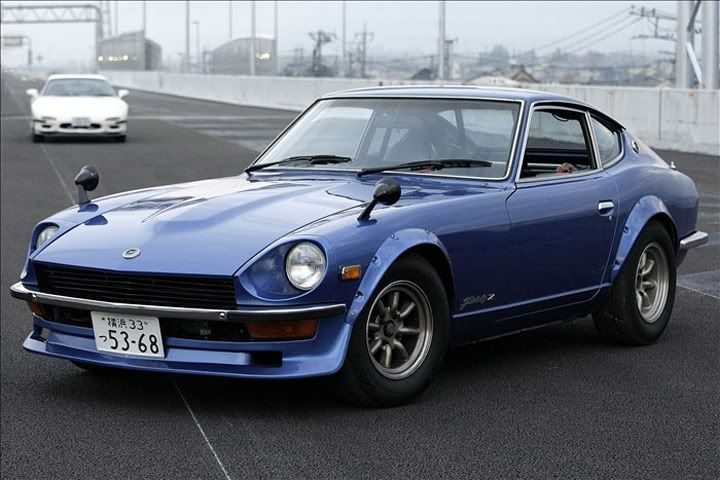
Wangan Midnight Nissan Fairlady 240Z S30 Image


The 1970 240Z was introduced to the American market by Yutaka Katayama, president of Nissan Motors USA operations, widely known as Mr. K. The 1970 through the mid-1971 model year 240Z was referred to as the Series I. These early cars had many subtle but notable features differing from later cars. The most easily visible difference is that these early cars had a chrome "240Z" badge on the sail pillar, and two horizontal vents in the rear hatch below the glass molding providing flow through ventilation. In mid-1971, for the Series II 240Z cars, the sail pillar emblems were restyled with just the letter "Z" placed in a circular vented emblem, and the vents were eliminated from the hatch panel of the car. Design changes for the U.S. model 240Z occurred throughout production, including interior modifications for the 1972 model year, and a change in the location of the bumper over-riders, as well as the addition of some emission control devices and the adoption of a new style of emissions reducing (and performance compromising) carburetors for the 1973 model year.[1]

The 1970 models were introduced in October 1969, received the L24 2.4 liter engine and a 4-speed manual. A less common 3-speed automatic transmission was optional from 1971 on, and had a "Nissan Full Automatic" badge.

In 2004, Sports Car International named this car number two on the list of Top Sports Cars of the 1970s. One of the most appealing Japanese cars ever produced, it nevertheless disappeared almost entirely from American roads within two decades, presumably because like most Japanese cars of the time it had insurmountable rust issues.

Specifications

  • Engine: 2,393 cc (146.0 cu in) L24 I-6, cast-iron block, alloy head, seven-bearing crankshaft, single overhead cam, 9.0:1 compression; Maximum recommended engine speed 7000 rpm.
    • Bore: 83.0 mm (3.27 in)
    • Stroke: 73.7 mm (2.90 in)
  • Fuel system: Mechanical fuel pump, twin Hitachi HJG 46W 1.75 in (44 mm) SU-type carburetors
  • Power: 151 hp (113 kW) at 5600 rpm (SAE gross)
  • Torque: 146 lbf·ft (198 N·m) at 4400 rpm (SAE gross)
  • Transmission: Four-speed manual, five-speed manual, or three-speed automatic (after September 1970)
  • Final drive ratios:
  • Brakes:
    • Front: 10.7 in (270 mm) discs
    • Rear: 9.0 in (230 mm) x 1.6 in (41 mm) drums
  • Suspension:
  • Steering: Rack and pinion, 2.7 turns lock to lock
  • Wheels: 4.5J-14 steel wheels with 175 SR 14 tires
  • Wheelbase: 90.7 in (2,300 mm)
  • Length: 162.8 in (4,140 mm)
  • Width: 64.1 in (1,630 mm)
  • Dry weight: 2,355 lb (1,068 kg)
  • Top speed: 125 mph (201 km/h)
  • 0 to 60 mph (97 km/h): 8.0 s
  • Typical fuel consumption: 21 mpg-US (11 L/100 km; 25 mpg-imp)

260Z

Datsun 260Z, 1977

 This model was sold in the United States for the 1974 model year only, but was available in other countries until 1978. The engine was enlarged over that of the 240Z with a longer stroke to 2.6 L. In the U.S., federal emissions regulations forced a reduction in ignition timing and compression ratio, resulting in a lower power output (140 hp) for the 260Z's despite the additional displacement, whereas in other countries the power output increased to 165 bhp (123 kW; 167 PS). A 3-speed automatic transmission was an option, and the 4-speed manual remained standard.

1974 brought for the first time to the S30 line a new 2/2 (2+2) seating option, which offered room for 4 passengers and an extra 11.9 in (302 mm) of wheelbase. These cars have a notably different roofline from the 2 seat coupes, incorporating larger opening quarter panel windows.

Some regard the 260Z as the least desirable of the S30 models, because of the reduced performance offered in comparison to the earlier 240Z, and also in comparison to the later 280Z with its fuel injected 2.8 liter motor.

The 260Z claimed a few updates or improvements or over the 240Z. The climate controls were more sensibly laid out and easier to work, and those cars with air conditioning now had the A/C system integrated into the main climate control panel. There was also additional stiffness in the chassis due to a redesign of the chassis rails which were larger and extended further back than previous models. The 260Z debuted a redesigned dashboard and console, as well as new seat trim, and door panels for the interior. The rear tail lights were updated, moving the reverse lights from the main tail light housing to the back panel. Early 1974 U.S. 260Z models had bumpers that resembled those of the earlier 240Z, though increased slightly in size, pushed away from the body somewhat, and wearing black rubber bumper guards rather that the previous chrome bumper guards with rubber strips. These early cars still had the front turn signals located below the bumpers. Late 1974 U.S. 260Z models (often referred to as 1974.5 models) carried the heavier bumpers that would remain on the 1975-76 model years of the 280Z. These late cars had the front turn signals relocated to the outer edges of the front grill, above the bumper.

Nissan 240Z (Fairlady Z), 1969

Specifications
  • Engine: 2.6 L (160 cu in) L26 I6, cast-iron block, alloy head, seven-bearing crankshaft, single overhead camshaft
    • Displacement: 156.6 cu in (2565 cc)
    • Bore: 83.0 mm (3.27 in)
    • Stroke: 79.0 mm (3.11 in)
    • Compression Ratio: 8.3:1 (93 oct)
  • Fuel System: Mechanical fuel pump, twin Hitachi HMB 46 W 1.75 in (44 mm) SU-type carburetors
  • Power: 162 hp (121 kW) at 5600 rpm
  • Torque: 157 ft·lbf (213 N·m) at 4400 rpm
  • Transmission: Four-speed manual or three-speed automatic
  • Brakes:
    • Front: 10.7 in (270 mm) discs front
    • Rear: 9.0 in (230 mm) X 1.6 in (41 mm) drums rear, servo assisted
  • Suspension:
    • Front: Independent with MacPherson struts, lower wishbones, coil springs, telescopic dampers, anti-roll bar
    • Rear: Independent with Chapman struts, lower wishbones, coil springs, telescopic dampers
  • Steering: Rack and Pinion, 2.7 turns lock to lock
  • Wheels/ Tires: 4.5J-14 steel wheels with 175 SR 14 tyres
  • Top Speed: 127 mph (204 km/h)
  • 0 to 60 mph (97 km/h): 8.0 sec
  • Fuel consumption: 20 mpg-US (12 L/100 km; 24 mpg-imp) to 28 mpg-US (8.4 L/100 km; 34 mpg-imp)
  • Engine oil (sump): 9.0 Imp pints (5.1 liters/10.7 US pints)

280Z

Datsun 280ZX, 1979

In a further effort to keep the S30 models sporting in the face of increasingly stringent U.S. emission and safety requirements, Nissan Motors released the Datsun 280Z model for the U.S. market in the 1975 model year. Both the 2 seat coupe and 2/2 (2+2) hatchback models remained available throughout the 1975-78 model year run of the 280Z.

For the 280Z, engine size was again increased, this time to 2.8 L, by enlarging the bore of the L26 engine to create the L28, and a reliable Bosch L-Jetronic fuel injection system was added.

1975 and 1976 models continued to be fitted with the Federally required 5mph crash test bumpers that were introduced for the mid-1974 model year of the 260z. These bumpers were smooth surfaced, and blended into smooth black rubber extensions as they met the body of the car. 1977 and 1978 models received bumpers with recessed channels added to the faces of the bumpers themselves, that blended into corrugated or accordion style black rubber extension trim. Also new for the 1977 model year, 280Zs no longer received the full size spare tire, and instead had a "space saver" spare and a larger fuel tank. This resulted in a raised rear deck area made of fiberboard, reducing cargo space. In 1977-78 an optional 5-speed manual transmission was available along side the 4-speed manual, and the 3-speed automatic options, which included a "5-speed" emblem on the left bottom edge of the rear hatch. 1977 also saw an update from the charcoal painted hubcap style (with a chrome Z floating in the amber center emblems) to a hubcap that resembled an alloy wheel, bearing a center cap with a chrome Z floating in a black circle.

In 1977 and 1978 respectively, Datsun offered two special edition models. The "Zap" edition was offered in 1977 as a "Special Decor Package". Zap cars were finished in Sunshine Yellow paint, and sported black stripes down the center and sides, with yellow, red, and orange chevrons at the front ends of the stripes. An estimated 1,000 "Zap Z" cars were offered in 1977. The "Zap Z" model was also used as the pace car in the 1977 Long Beach Gran Prix. The Black Pearl edition (produced in 1978) came with Black Pearlescent paint and a "Special Appearance Package" (SAP), which consisted of dual racing mirrors, rear window louvers, and a unique red and silver stripe. It is estimated that between 750-1,500 of these cars were produced.

The S30 series Z car was replaced in 1979 by the S130 Nissan Fairlady 280ZX / Datsun 280ZX.

 Owner modifications

The most common conversion is to replace the 2.4 or 2.6 liter engine with the L28 2.8 liter engine from the later model 280Z/280ZX. Turbo 280ZX L28s can be retrofitted into earlier cars using the later wiring harness and associated parts.

The S30s are popular for Skyline RB25DET/RB26DETT swaps, with numerous kits available.
The S30 has also proven to be a popular and affordable basis for V8 and other engine conversions, usually a Chevrolet Small-Block engine or Ford. Several vendors make kits and informational books to allow the conversion to be done as a nearly bolt-in process.

The 280Z, although relatively heavy and smog-controlled in stock form due to government regulations, is easily modified. For instance, simply removing the heavy front bumper and adding a front spoiler corrects the otherwise jittery high-speed handling of the stock version.

Replacement of stock bumpers with those from the 240z, along with removal of spare tire, jack, and air conditioning system can lighten a 280z by nearly 200 lbs. Some of the weight gain of a 280z is actually a benefit over the 240z such as a much stronger Nissan R200 rear differential replacing the R180 in the 240z, and the addition of a rear sway bar. Further, a great variety of aftermarket parts are available to, in effect, bring the 280Z back in line with the ethic of the early Z-cars, such as free-flowing exhaust/header kits and the installation of a 280ZX turbo turbocharger.


Super Clean S30 Nisan Fairlady (240Z) 

Super Clean S30 Nisan Fairlady (240Z) 


Thursday, 16 June 2011

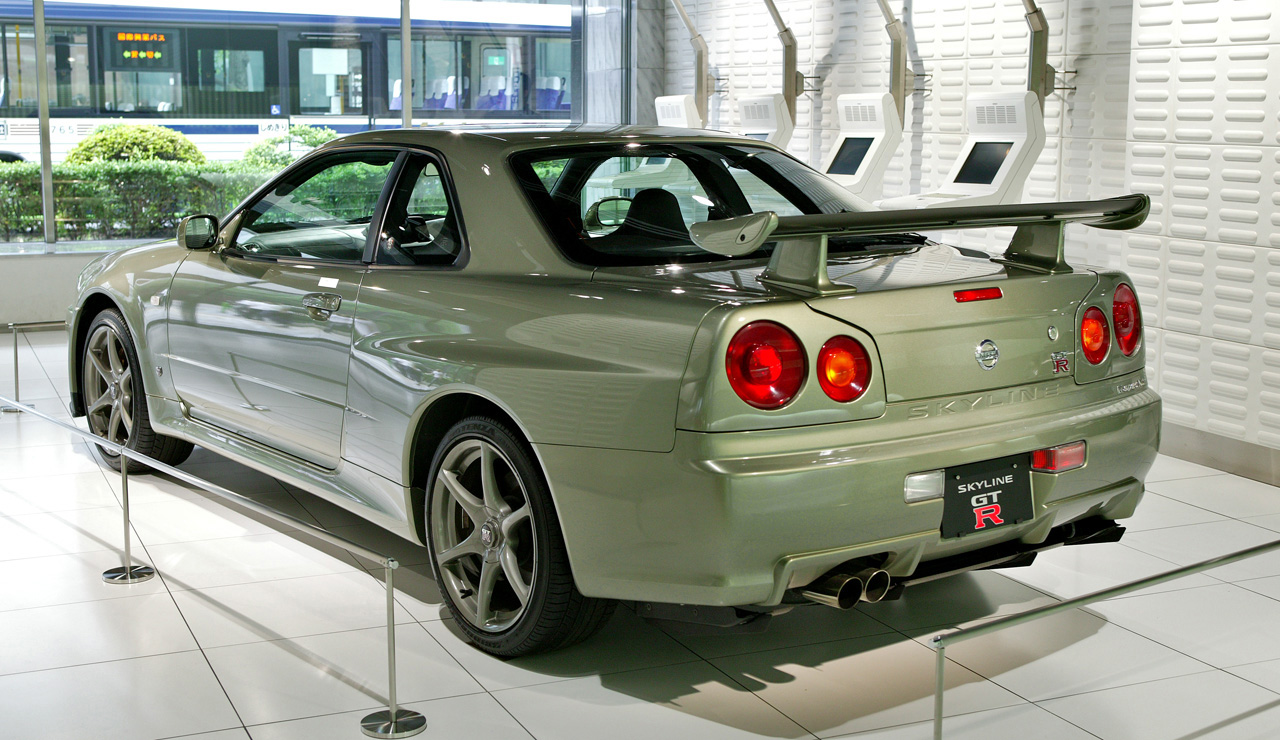
Nissan Skyline GT-R

photo 


The Nissan Skyline GT-R is a Japanese sports car based on the Nissan Skyline range.
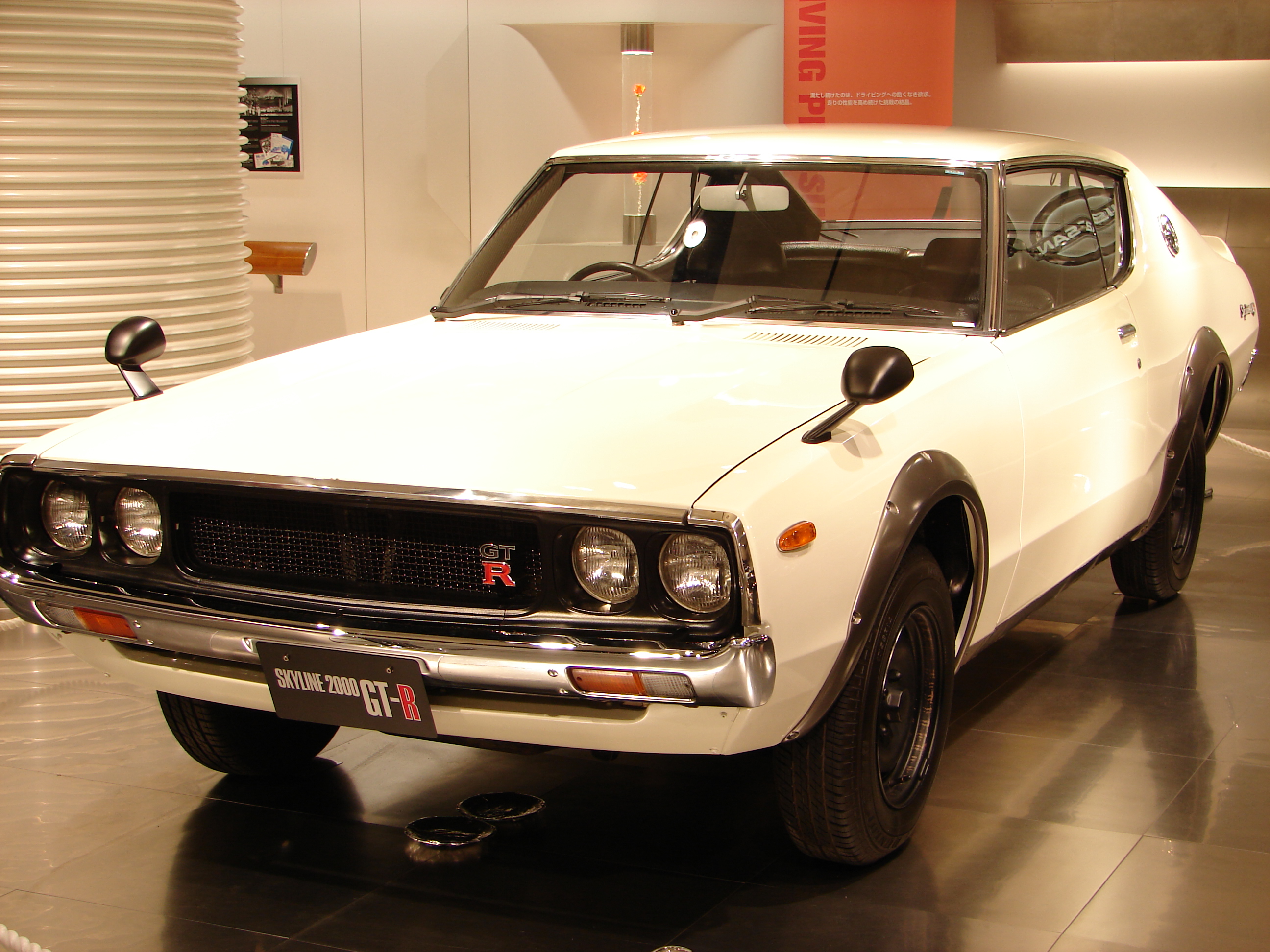
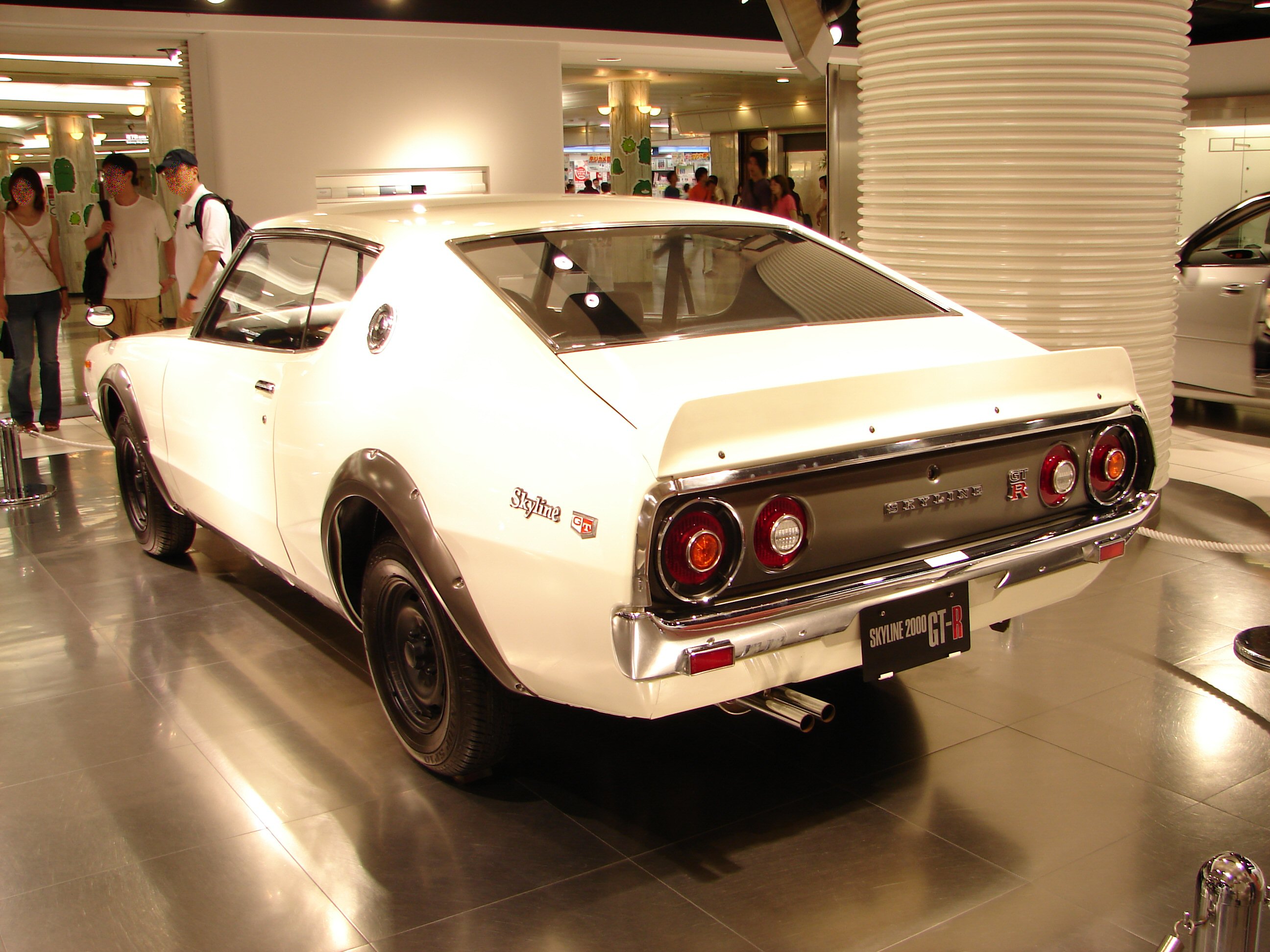
The first GT-Rs were produced from 1969–1977. After a 16 year hiatus since the KPGC110 in 1972, the GT-R name was revived in 1989 with the Skyline R32. This car was nicknamed "Godzilla" by the Australian motoring publication "Wheels" in its July 1989 edition, a name that sticks to this day. The R32 GT-R dominated the motorsport in Japan, winning 29 straight victories out of 29 races. The GT-R proceeded to win the JGTC Group A series championship 4 years in a row, and also had success in the Australian Touring Car Championship winning from 1990–1992, until the GT-R was outlawed in 1993.[1] The Skyline GT-R (R33) was also the first production car to lap the legendary Nürburgring in under eight minutes.
The Skyline GT-R became the flagship of Nissan performance, showcasing many advanced technologies including the ATTESA-ETS 4WD system and the Super-HICAS four-wheel steering. The GT-Rs remained inexpensive compared to its European rivals, with a list-price of ¥4,500,000 (US$31,000). Today, the car is popular for import Drag Racing, Circuit Track, Time Attack and events hosted by tuning magazines. The GT-R is the winner in the 2007 Tsukuba Time Attack held in Japan—the M-Speed GT-R (9 out of the top 15 cars consists of GT-Rs). Production of the Skyline GT-R ended in August 2002. The car was replaced by the GT-R, an independent vehicle not sold as a Skyline.
The Skyline GT-R was never manufactured outside of Japan, and the sole export markets were Hong Kong, Australia and the UK, in 1991,[2] and New Zealand as used Japanese imports. Despite this the car has become an iconic sports car, including in countries from the Western World (mainly the United Kingdom, Australia, New Zealand, Ireland and Canada).[3][4][5] It has become notable through pop culture such as cinema and video games like The Fast and the Furious series, Initial D, Wangan Midnight, and Gran Turismo.
The car was named by BBC's Top Gear as the only true Japanese contribution in the line of supercars.[6] The car was also named by the main presenter of the show, Jeremy Clarkson, as one of the best cars in the world.

Nissan Skyline 

History of the brand

The Skyline name originated from Prince automobile company, which developed and sold the Skyline line of sedans before merging with Nissan-Datsun. The GT-R abbreviation stands for Gran Turismo Racer while the GT-B stands for Gran Turismo Berlinetta. The Japanese chose to use Italian when naming the car – as most cars made in Japan at that time used Western abbreviations – to further enhance sales. The earliest predecessor of the GT-R, the S54 2000 GT-B, came second in its first race in 1964 to the purpose-built Porsche 904 GTS. The next development of the GT-R, the four-door PGC10 2000 GT-R, scored 33 victories in the one and a half years it raced, and by the time it attempted its 50th consecutive win, its run was ended by a Mazda Savanna RX-3. The car took 1000 victories by the time it was discontinued in 1972. The last of the original GT-Rs, the KPGC110 2000GT-R, used an unchanged S20 119 kW (160 hp) inline-6 engine from the earlier 2000 GT-R and only sold 197 units due to the worldwide energy crisis. This model was the only GT-R to never participate in a major race despite the sole purpose-built racecar which now resides in Nissan's storage unit for historical cars in Zama.
The Skyline continued into the 1990s when it became popular largely because it remained rear wheel drive, while most other manufacturers were focusing on front wheel drive cars.
Throughout its lifetime, various special editions containing additional performance-enhancing modifications, were released by Nissan and its performance division Nismo (Nissan Motorsport).
  

Versions

File:C10GT-R.jpg

 1st generation (1969–1972)

The first Skyline GT-R, known by the internal Nissan designation PGC10, was released on February 4, 1969. It was available originally as a four-door sedan after a public debut at the 15th annual Tokyo Motor Show. It was advertised alongside the Nissan R380A racecar to showcase its racing heraldry. It was equipped with the 2.0 L DOHC S20 I6 producing 160 hp (120 kW) at 7000 rpm and 118 N·m (87 ft·lbf) of torque. Power was delivered to the rear wheels by a 5-speed manual transmission. The first Skyline GT-R rode on a semi-trailing arm strut suspension. It was available as a coupe in March 1971 with the chassis code KPGC10.
A popular name for the PGC and KPGC10 Skyline GT-R was "Hakosuka," which is a combination of the Japanese word for box ("hako" or ハコ) and the pronounced abbreviation of skyline ("Suka" or スカ as in スカイライン or "sukairain").
A total of 1,945 PGC and KPGC10 Skyline GT-Rs were produced.

kenmeri_1.jpgkenmeri_2.jpg

2nd generation (1972–1977)

The KPGC10's successor, the KPGC110, was released in 1973 after its introduction at the 1972 Tokyo motor show. Powered by a 1989 cc I6 S20 engine, the second generation GT-R delivered power to the rear wheels through a 5-speed manual gearbox. The suspension was a semi-trailing ring arm setup and minor aerodynamic parts were added.
This edition of the GT-R was also known as the "Ken & Mary" Skyline, due to a popular advertisement featuring a young couple (Ken and Mary) enjoying the Hokkaido countryside. The advertisement later spawned a hit song by Buzz, and the tree featured in the advertisement later became a minor star itself.[citation needed]
Unfortunately, the second generation GT-R was unsuccessful, for a gas crisis hit in the early 1970s, drying out any demand for high-performance sports cars. A total of 197 cars were built by the end of its short production run. For the next decade, this would be the last GT-R until the production of the R32 in 1989.


3rd generation (1989–1994)

Concept

After cancelling the Skyline GT-R in 1973, Nissan revived the GT-R again in 1989. At the time Nissan was competing in Group A Racing with the Skyline GTS-R. Nissan wanted to retire the GTS-R in favor of a more competitive vehicle. The new generation GT-R, E-BNR32 chassis (commonly shortened to R32), was designed to dominate Group A racing.
Nissan Kohki (Nissan's power train engineering and manufacturing facility) originally tested a twin turbocharged 2350cc bored and stroked version of the RB20 engine. This set up produced 233 kW (313 hp) and used a RWD drivetrain. Under Group A regulations, a turbocharged engine must multiply its engine displacement by 1.7, putting the new Skyline in the 4000 cc class, and requiring the use of 10-inch-wide tires. Knowing that they would be required to use 10-inch-wide tires, Nissan made the decision to make the car all wheel drive. Nissan developed a special motorsport-oriented AWD system for this purpose called the ATTESA E-TS. Although this assisted with traction, it made the car 100 kg (220 lb) heavier; the added weight put the GT-R at a disadvantage to other cars in the 4000 cc class. Nissan then made the decision to increase the displacement to 2600 cc, and put the car in the 4500 cc class, with the car's weight near-equal to competing cars. The 4500 cc class also allowed for 11-inch-wide tires. New engine block and heads were then developed to better match the increased displacement. The result was a 600 horsepower.[9] Later REINIK (Racing & Rally Engineering Division Incorporated Nissan Kohi) produced Group A racing engines between 373–485 kW (500–650 hp)[10] depending on track conditions.

http://rpmgurus.com/wp-content/uploads/2010/06/Nissa_R32GTR_Backview1.jpg

Production

This new 2.6 L all wheel drive concept was put into production as the R32 Nissan Skyline GT-R. The R32 developed 206 kW (276 hp) and 266 lb·ft (361 N·m) of torque, it had a curb weight of 1,430 kg (3,146 lbs). Initial production of the car was the required 510 to allow for homologation starting on May 22, 1989. Its successful debut along with critical acclaim by the motoring press created a heavy demand for the car. Nissan officially started an unlimited production run August 1989, and began its Group A campaign in 1990. Due to strict Group A homologation rules, Nissan was required to also sell a series of the Skyline GT-R which more accurately reflected the car they use in Group A racing. This series was called the Skyline GT-R 'Nismo' edition.


The Skyline GT-R 'Nismo', introduced on February 22, 1990, has a total production of 560 units as required for the "Evolution" models regulation (over 500). Its purpose is to homologate a number of aerodynamic changes used in Group A racing. Changes include additional ducts in the front bumper to improve airflow to the intercooler, a bonnet lip spoiler to direct more air into the engine bay, and an additional boot lip spoiler to provide more downforce. The 'Nismo' GT-R was only available in Gunmetal Grey.
The Skyline GT-R 'N1' model, introduced on July 19, 1991, was designed for home-market N1 racing with a total of 228 units produced. The most notable change was in the engine, which was upgraded to the R32-N1 specification. The car was also lightened by the removal of the ABS, air conditioning, sound system, rear wiper, trunk carpet, and the use of light-weight headlights. No color options were available and all 'N1' cars were delivered with a thin layer of Crystal White paint. The result was a 30 kg weight savings for a curb weight of 1,400 kg.
 To celebrate the success of the GT-R in both Group N and Group A racing, Nissan introduced the Skyline GT-R V-Spec ("Victory SPECification") car on February 3, 1993. The V-Spec added Brembo brakes and a retuned ATTESA E-TS system to the Nismo and N1 packages, as well as 17" BBS wheels with 225/45/17 tires. The V-Spec has a list price of ¥5,260,000.
Finally on February 14, 1994 the Skyline GT-R V-Spec II was released, with the only change being wider 245/45/17 tires. In addition, both the V-Spec and V-Spec II had a curb weight of 1,480 kg (3,256 lbs), weighing 50 kg (110 lbs) more than the standard GT-R.[11] Total production of the V-Spec I and II was 1,453 and 1,303 units respectively.
Total production of the R32 Skyline GT-R was 43,394 units, with production starting on May 22, 1989. An above average proportion of the GT-R's were sold in white: this is likely because white is the national racing color of Japan in international motorsport.

 File:Nissan Skyline R33 GT-R 001.jpg 
 

4th generation (1995–1998)

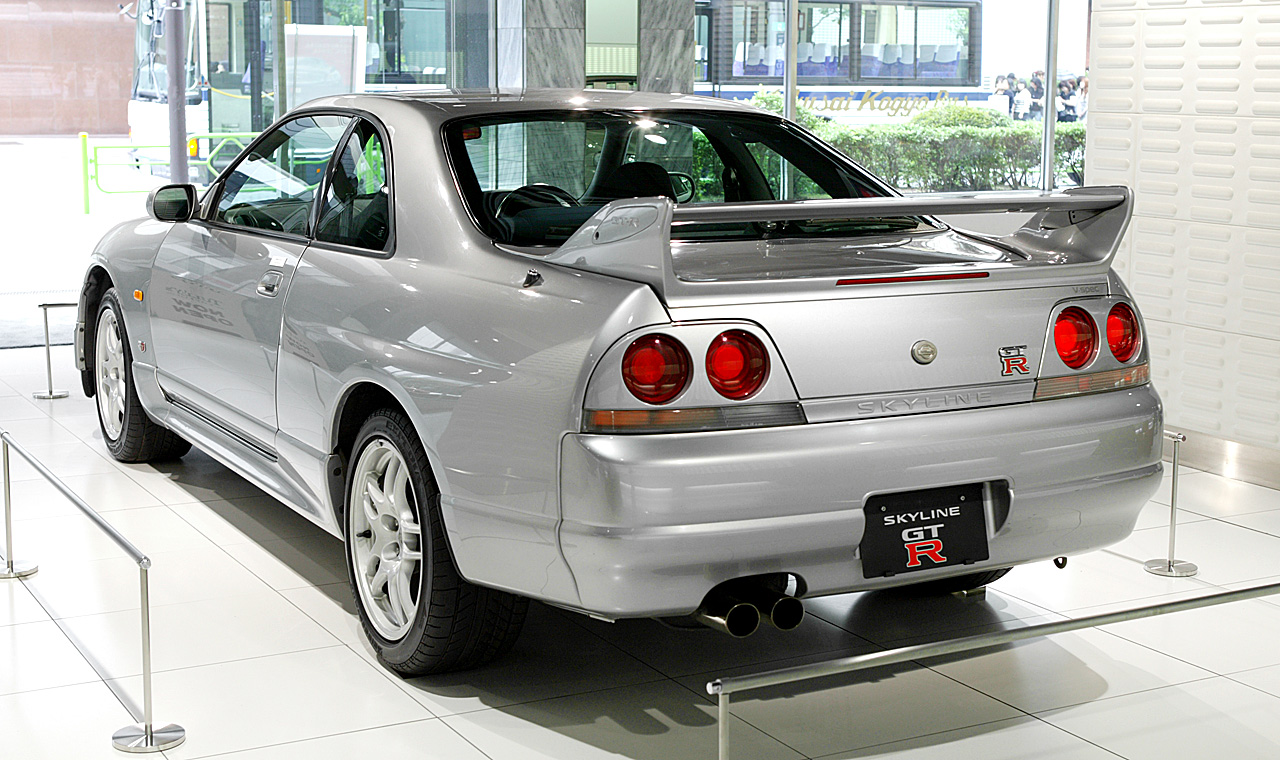
The E-BCNR33 (R33) was developed in 1995 as a successor to the venerable R32 model. The engine in the R33 was nearly identical to the R32. It used the same turbochargers and the same specification for the manual gearbox, although the syncros were made to be stronger. The engine corrected the R32's weak oil pump drive collar, which tended to fail in higher power applications, with a wider collar. The base model R33 GT-R weighs 1,540 kg (3,400 lb).[12]
The R33 GT-R launched in January 1995 with the base model GT-R and the V-spec model. The V-spec model weighed in 10 kg (22 lb) heavier, and had sportier suspension resulting in lower ground clearance. The V-spec also featured the newer ATTESA E-TS Pro all wheel drive system, which included an Active Limited Slip differential. The V-spec model also included a four wheel independent channel anti-lock braking system.

File:Nissan Skyline R33 GT-R 002.jpg

At the same time as the release of the R33 GT-R and GT-R V-spec, Nissan released the R33 GT-R V-spec N1 model. Changes made in the R33 N1 are similar to those in the R32 N1. The car was made lighter by removing the ABS, air conditioning, sound system, rear wiper and trunk carpet. The R33 GT-R V-spec N1 received the slightly revised R33 N1 engine.


5th generation (1999–2002)

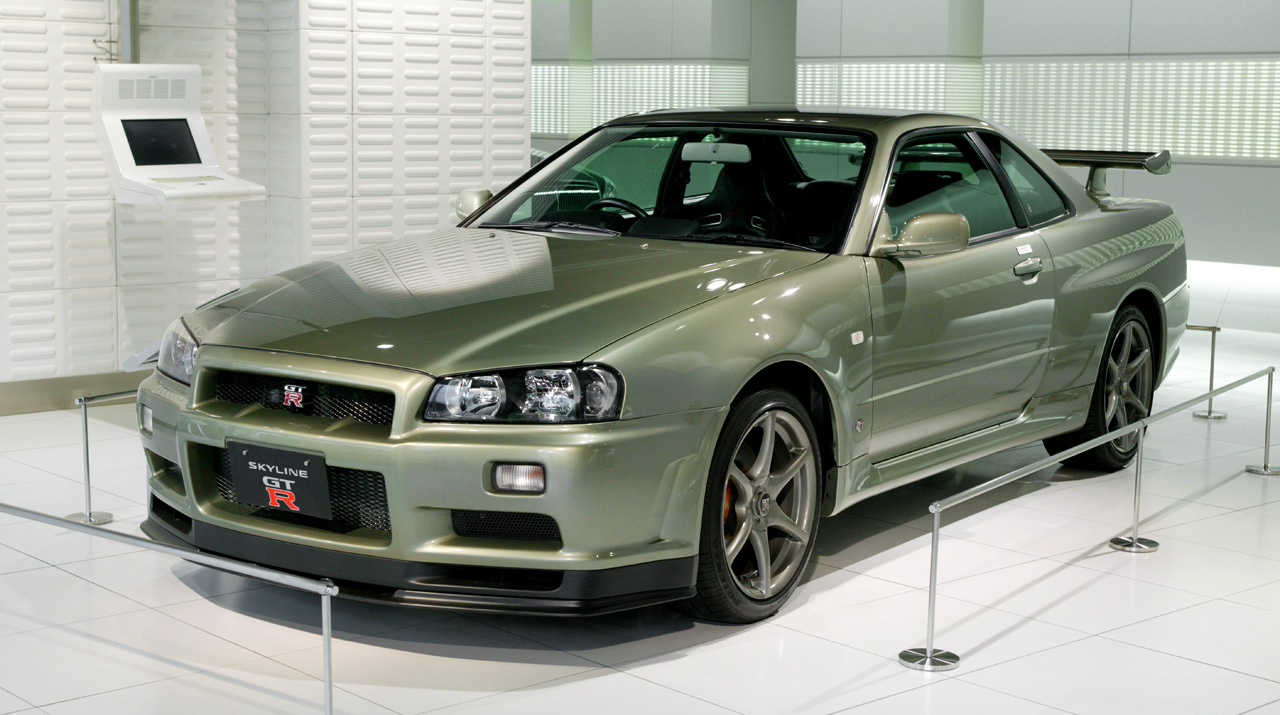
The GT-BNR34 (R34) Skyline GT-R and GT-R V-spec models were released in January 1999. The R34 GT-R was also made to be shorter (from front to rear), and the front overhang was reduced. The valve covers were also painted glossy red, rather than dull black.
A new feature on the R34 GT-R is a 5.8" LCD multifunction display on the center of the dashboard, which shows seven different live readings of engine and vehicle statistics such as turbocharger pressure (1.2 bar max), oil and water temperature, among others. The GT-R V-spec model added two extra features to the display: intake and exhaust gas temperatures. Nismo Multi-function Displays (MFD) can be bought at an extra cost, they include a lap timer, G-Force meter and an increase in boost pressure measurement to 2 bar. The R34 GT-R was made shorter in response to customer concerns who thought the R33 was too bulky.
Like the R33, the new R34 GT-R V-Spec (Victory Specification) models come equipped with the ATTESA E-TS Pro system and an Active LSD at the rear, while standard GT-R models come with the non-Pro system and a conventional mechanical differential. The V-spec model also had firmer suspension and lower ground clearance, thanks to front and side splitters, as well as a rear carbon fiber air diffuser, designed to keep air flowing smoothly under the car.
Another special model of the R34 GT-R is the M-spec. It was similar to the V-spec, but had special "Ripple control" dampers, revised suspension set up, stiffer rear sway bar and a leather interior with heated front seats. The 'M' on the M-Spec stood for Mizuno who is the chief engineer of Nissan.
At the time of the R34's release, like the R32 and R33, Nissan released an R34 N1 model. The R34 GT-R N1 was equipped similar to the R32 and R33 N1 models – a homologation special. It was sold without ABS, air conditioning, audio equipment, rear wiper, or trunk lining. The new R34 N1 was also given the new R34 N1 engine. Only 45 R34 N1 models were produced from the factory, 12 of which were used by Nismo for Super Taikyu racing. The rest were sold to various customers, mostly racing teams and tuning garages.
The V-Spec versions was also imported into the UK, a number of modifications was carried out to the car, these were 3 additional oil coolers, revised ECU map, full Connelly leather interior, underbody diffusers, stiffer suspension, active rear limited slip differential, extra display feature on the in car display.
File:Nissan Skyline R34 GT-R Nür 002.jpg

 In August 2000, Nissan released the V-Spec II, replacing the V-Spec. The V-Spec II has increased stiffness in the suspension (even stiffer than the original V-spec) and had larger rear brake rotors. It also comes equipped with a carbon fiber hood equipped with a NACA duct, which is lighter than the aluminum that all other GT-R hoods are made from. Also different on the V-Spec II was an iridium center console and aluminum pedals. The seats were upholstered with black cloth rather than the gray cloth used on previous R34 GT-R models, and the amber turn lenses were replaced with white versions. With the exception of the carbon fiber bonnet, the standard trim level GT-R also received these updates.

In February 2002 Nissan released a final production model of the R34 GT-R called the Skyline GT-R V-spec II Nür and the Skyline GT-R M-spec Nür. The Nür was named after the famous German Nürburgring racetrack, where the Skyline was developed. In total 1000 R34 GT-R Nür(s) were made, 750 were V-Spec II Nürs' and 250 M-Spec Nürs'. The Nür model featured an improved RB26DETT based on the N1 racing engine. The standard turbochargers were upgraded to larger versions with a slight increase in boost and the ceramic blades were replaced with steel versions. This has increased lag, but to compensate the turbo's durability was improved while being able to handle a bigger boost increase. This allowed tuners to increase the boost safely with standard turbos up to 340 kW (450 hp) at the crank. The V-spec II Nür is based on the regular V-spec II model, and the M-spec Nür was based on the regular M-spec model. Other than the addition of the Nür engine, the Nür models also included a different color of stitching on the interior trim, as well as a speedometer reading up to 300 km/h (186 mph). Due to then-current Japanese law the car was advertised as having 206 kW (276 hp) but it actually had over 246 kW (330 hp) when it left factory.